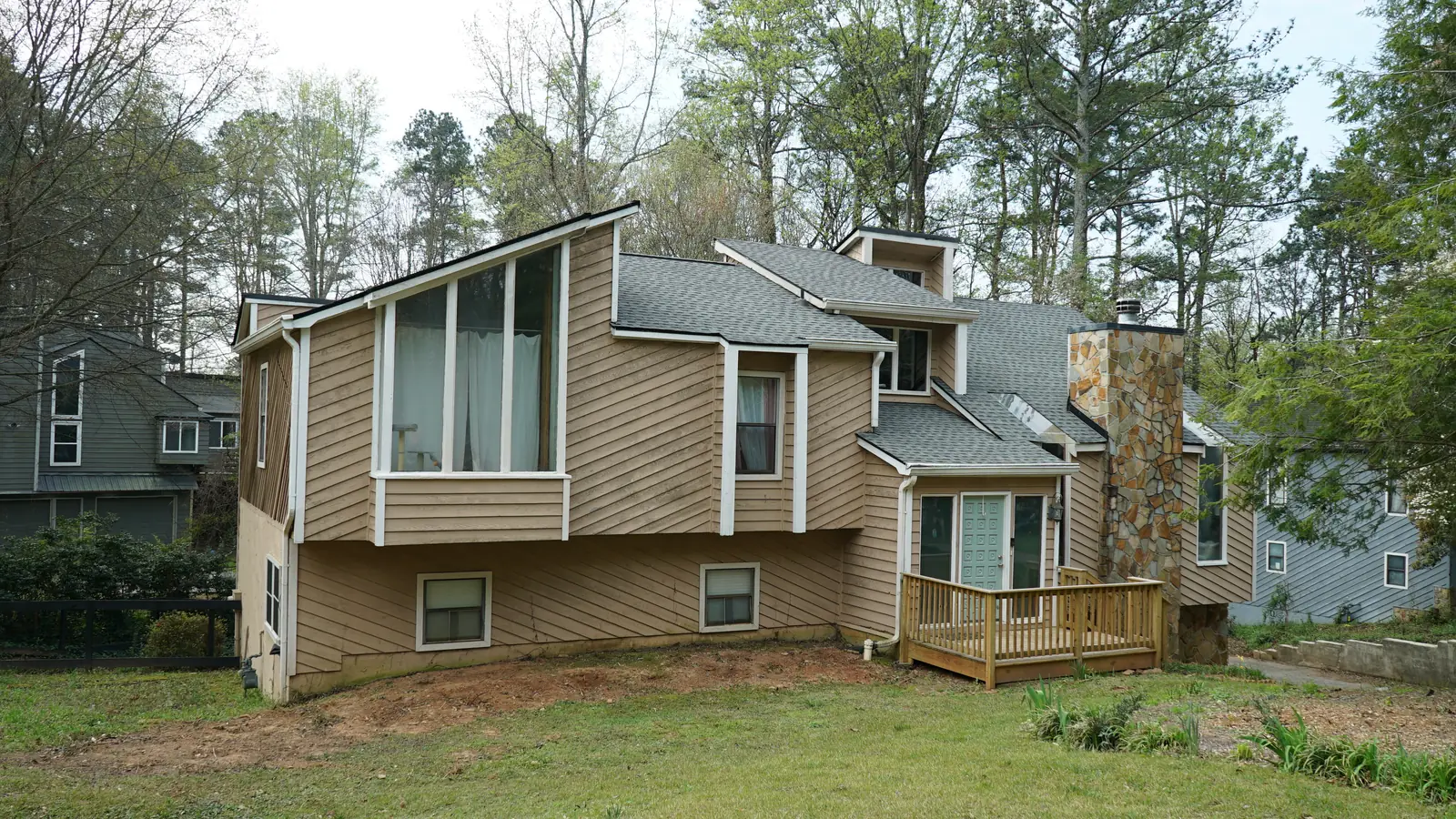
Siding is your home’s first defense against Georgia’s heat, humidity and storms. When it starts to fail, the early signs are easy to dismiss — a little fading here, a soft spot there — until the day you discover the real damage is behind the wall, not on it. This guide walks through the eight signs that most reliably mean it is time to replace, not just repair — and what to do the moment you notice one, so a small problem does not quietly become a large one.
Not sure how bad it is? Get a free exterior inspection →
Cracks or warping Cracked, buckled or warped boards no longer seal out water — and warping usually means moisture is already under the panel.
Bubbling or blisters Bubbles under the surface mean water is trapped in the siding. That is a moisture problem, not a paint problem.
Soft or spongy spots If an area feels soft or crumbles under pressure, rot has set in. A hollow sound when tapped can signal dry rot beneath.
Peeling paint or wallpaper inside Interior paint or wallpaper failing on exterior walls is a classic sign moisture is getting through the siding into the wall.
Mold, mildew or fungus Persistent growth on or near the siding points to excess moisture the material is no longer keeping out.
Pests and holes Woodpecker holes, insect activity or gaps let pests — and water — into the wall assembly.
Rising energy bills Failing siding and the moisture behind it undermine your wall’s performance, making your HVAC work harder.
Fading or frequent repainting Heavy fading, or repainting every few years just to keep up, often means the siding itself is at the end of its life.
Seeing two or three of these? It’s worth a professional look before the next big storm. Book my free inspection
Georgia storm season is hard on already-weakened siding — a quick professional check now can save a structural repair later. Get my free inspection
Not every sign means a full replacement. When damage is isolated — a few boards on an otherwise sound wall — a targeted repair can be the right call. But when the signs are widespread, when rot or moisture has reached the structure, or when you are repainting constantly just to keep up, replacement is almost always the better value. The honest test is not the number of damaged boards; it is whether water is still getting in.
The most expensive siding problem is the one you paint over. Moisture behind the wall does not wait for a convenient season.
If you are weighing a replacement, our
Marietta cost guide and
guide to hidden wood rot are good next reads.
Getting quotes for your home?
We respond within 24 hours. No high-pressure sales.
The same eight signs show up on homes everywhere, but Georgia’s climate speeds them along. Long stretches of heat and humidity keep moisture pressed against the exterior, storm season drives rain into every gap, and the freeze-and-thaw swings of a Georgia winter work cracks wider over time. Wood-based and builder-grade materials feel this most: they absorb moisture, expand and contract, and eventually give water a path behind the wall. That is why a soft spot or a bit of bubbling that a homeowner up north might watch for a couple of years can progress much faster here.
It is also why catching these signs early pays off so directly. Moisture that reaches the sheathing or framing turns a straightforward siding job into a structural repair, and the cost climbs with every month it is ignored. A quick annual walk-around — especially after storm season — is one of the cheapest forms of home insurance you can give yourself.
Get a straight read on your siding. A free exterior inspection and, if you need it, a written, itemized replacement quote within 24 hours.
Get my free inspection Call (678) 400-2012
Noticing one of these signs is not a reason to panic, but it is a reason to act deliberately. Start by documenting it: take clear photos of the affected areas, note when you first saw them, and check whether the problem is spreading week to week. If the trigger was a specific storm, record the date — that detail matters if an insurance claim is on the table. Next, resist the temptation to simply repaint or caulk over the symptom, because cosmetic fixes hide moisture problems rather than solving them and can cost you more when the underlying damage surfaces later.
Then get a professional read before the next round of Georgia weather. A qualified contractor can tell you whether you are looking at an isolated repair or a wall that has been letting water in, and can document the condition so you are making a decision on facts rather than guesswork. Catching a failing wall in a mild season — rather than after a storm forces the issue — almost always means a calmer project and a better price.
• Guidance reflects common siding-failure indicators; confirm any specific claims and inspection process against Siding Depot operations before publication.
• Internal links only — no third-party or aggregator references used.
Ready for Your Free Estimate?
Join 1,000+ happy Georgia homeowners. Professional measurement and detailed written proposal within 48 hours.